


There is mention of an “…inodorous boletus” in a writing by A.C. Cassio (1669-1760), rector of the Papal Court and native of Borgotaro, and evidence that the boletus mushroom even at that time was a source of income for local families. Toward the end of the 19th century, thanks to two companies (Colombo Calzolari and Bruschi Lazzaro), the basis was established for modern and rational production and marketing of the product.
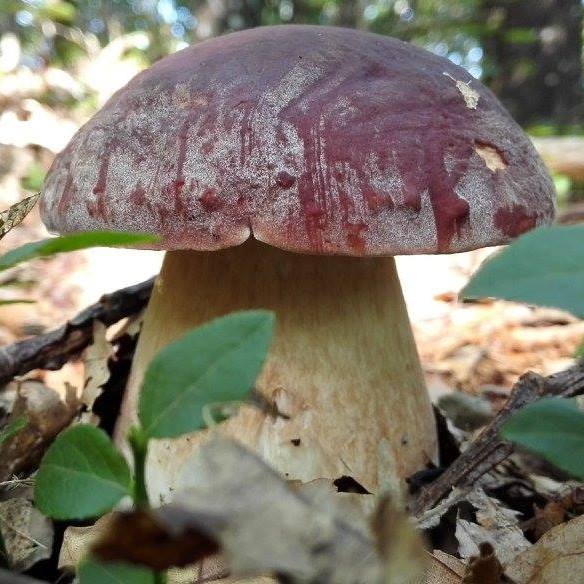
Four varieties are included in the name “Fungo di Borgotaro”. Boletus aestivalis (or “fungo rosso“) has a hemispherical and convex-pulvinate cap, a dry, reddish-brown pubescent cuticle, a solid stem that is large at its base and the same colour as the cap but with lighter tones, and a soft, light texture. B. pinicola (or “moro“) has a cap with a whitish pruinose cuticle and brownish red-wine colour, the stem is squat and solid and its colour can range from white to ochre to reddish brown. B. aereus (or “magnan“) has a hemispherical cap that becomes convex and flattened-opened with a dry, smooth, bronze-copper-coloured cuticle, the stem is solid and brown-ochre in colour and finely reticulate, the meaty part of this mushroom is solid and white with an intense flavour and aroma. B. edulis (or “fungo del freddo“) has a shape that is similar to B. aereus but with a non-separable cuticle and colouring that goes from creamy white to chestnut brown to blackish brown, the solid stem is whitish tending toward the colour of hazelnuts, rounded and later elongated, and the meaty part of the mushroom is solid and white.
B. aestivalis appears in chestnut forests between May and September; B. pinicola is present in chestnut forests in summer, in beech forests and under white fir trees in autumn; B. aereus can be found in oak and chestnut forests between July and September; B. edulis is present in beech, fir and chestnut forests from the end of September until the first snowfall.
The total area involved in this PGI is more than 33,000 ha: about 15,400 ha in the municipality of Pontremoli, about 8,800 ha in the municipality of Albereto and the remaining nearly 8,900 ha in the municipality of Borgo Val di Taro.
The product
The Fungo di Borgotaro is characterised by its fragrant aroma and “clean smell which is neither spicy nor with hints of hay, liquorice or fresh wood”: organoleptic characteristics which denote quality and esteemed value, differentiating these mushrooms from other similar products from other areas.
Production area
The production area includes the territory of the municipalities of Pontremoli and Zeri in the province of Massa Carrara and Borgotaro, Albereto, Berceto, Compiano, Tornolo and Bedonia in the province of Parma
-
Promoter organisation
CONSORZIO DEL FUNGO DI BORGOTARO IGP
Via Nazionale, 54
43043 – Borgo Val di Taro (PR)
Tel: 052590155;
e-mail: info@fungodiborgotaro.com
web: www.fungodiborgotaro.com -
Certification
Suolo e Salute s.r.l
Via Paolo Borsellino, 12/B
61032 – Comune: n.d. (291)
Tel: +390721 860543; Fax: +390721 869679
e-mail: info@suoloesalute.it
web: www.suoloesalute.it -
Production area
The production area includes the territory of the municipalities of Pontremoli and Zeri in the province of Massa Carrara and Borgotaro, Albereto, Berceto, Compiano, Tornolo and Bedonia in the province of Parma
-
